Game Ramblings #222 – Pokemon Pokopia

More Info from Nintendo

  • Genre: Action RPG/Sandbox Builder
  • Platform: Switch 2

Having played Dragon Quest Builders 2, I knew roughly what I was getting into and where my expectations were. I figured I would effectively be playing the sequel to that game with a Pokemon covering. That’s definitely the bulk of what I got and those things tied to the IP were well integrated. However, what I also got that I didn’t expect was an incredibly dark story backing the setup to get us into the game, but we’ll get to that.

A lot of what made the building aspect of DQB2 work so well for me was indirectly carried over and it really settled me into the flow of the game.

The big thing for me in DQB2 was that tasks could be automated – for example, you learn to farm and task a townsperson to continue doing that for you; you learn to cook a recipe and have a townsperson continue to do that – and that still exists in some respects here. Throughout the game you start getting Pokemon or placeable items that you can add resources to to automate production. For example, Scyther can turn wood into boards if you give them to him. If you create a smelter, you can add raw ore to it to get ingots if you have a fire Pokemon. If you give clay to a fire Pokemon they can create bricks. If you put limestone in a mixer you can have a Pokemon with the Crush ability make concrete. These are all little tasks that can be done to get advanced resources. The big change from DQB2 is that the player cannot do these on their own and must have recruited the Pokemon associated with the task.

There’s a similar aspect to building that comes over here, but again in a slightly less automated way. In DQB2 you can setup builds and apply townspeople to them, but the rest of automation allows things to kind of continue on in the background while you go do anything else. Here, you setup the build, bring all the resources, recruit Pokemon with specific specialties, then set them about building the thing.

It’s a little bit more player directed, but also less automated. In a lot of ways this kind of bugged me early on as it felt like I had to be a little bit too involved with my individual Pokemon and steering them to start things for me. However, over time I kind of got used to just bringing Pokemon resources and things to do and assuming that over time they would naturally get around to handling the tasks for me and being less focused on one specific thing to do now and more on doing a wide range of tasks over time. I can easily be running around building out habitats for Pokemon or cleaning up junk or building paths or shaping the environment and by the time I get back around to the resources I need to build some story thing they’re kind of just there. It ended up steering me more into the sandbox nature of the genre than I think I typically would have been comfortable with.

A lot of the systems are kind of that way. They’re similar to DQB2, but less automated and more player directed. Where the focus has instead changed is very well oriented with the Pokemon IP. Your focus is instead on creating environments to pull Pokemon into your towns.

Every Pokemon in this game has some habitat that it wants to live in. It may be a simple four square patch of grass, or maybe it’s flowers and a shade tree, or maybe it’s a vegetable garden, or maybe it’s a volcanic rock next to lava, or maybe it’s a perch on the edge of a cliff, or maybe it’s a patch of grass that is also next to the ocean, or maybe it’s a patch of moss that is also next to a hot spring. The point being is that the player’s focus is on very specific micro tasks to bring new Pokemon into your town, and specifically because you need a variety of Pokemon to get everything done.

There’s about 30 abilities in the game and having a wide variety of them is extremely important. Some are pretty generic and end up being used across all your towns. It may be something like Burn to light campfires used to recruit certain Pokemon or Chop to create Lumber or Fly to allow you to fast travel to specific Pokemon. Some are instead pretty directly tied to the story like Rotom’s DJ ability to play music for a town party or Tinkmaster’s Engineer ability used to build a large story-focused building. Making sure that you recruit a wide range of abilities ends up being a more driving factor for your towns than the automation of DQB2 as it makes it far easier to tailor your current needs to the area you’re in if you have the ability to task any Pokemon there to do something for you. It’s also the thing that is so obviously tied to the IP as the abilities at play, how to recruit Pokemon, and ultimately getting that “collection” of Pokemon in your towns is the most Gotta Catch em All tie-in that the game has.

The one omission that did surprise me is that there was no battling. Pokemon is about collecting but it’s also about battling and the lack of it kind of points right into the overall plot. Do Pokemon battle because they’re told to or because they naturally do? Without humans, is this coexistence kind of their natural state?

So then, let’s look at the story itself. It’s dark if you actually read into it.

Spoiler

The TL;DR version is that this is the world of Pokemon, largely taking place in Gen 1 ruined cities, and all humanity has left Earth because the environment was destroyed. Rather than taking their Pokemon with them to space, they left them in the existing PC storage infrastructure in the event they could ever return back to the planet’s surface. During this process a hacker put in place safety checks to automatically release Pokemon if the return to the surface took too long and the environment improved enough to support Pokemon existing.

This kind of implies a few things. For one, humanity left and never came back and it’s not really specified how long this has been. Everything being ruins implies at least decades, if not centuries, and humanity existing at all is only finally confirmed in the credits sequence. It also implies that Ditto is a freak and can kind of exist anywhere, and that it was kind of lucky that Ditto happened to come out around the same time that Tangrowth also did, leading into the player starting to improve the world. It implies that the player setting up habitats for Pokemon isn’t actually recruiting wild Pokemon because they all likely were killed by the natural disasters but instead is setting up habitats in a way that the PC storage system finds candidate Pokemon to release back into the wild. The fact that humans were not accessing their Pokemon in space also implies that humanity is far enough away that they literally cannot and do not have access to Earth’s systems and they kind of just left it all behind. All throughout the game it’s hammered into the player that the Pokemon miss their humans, and the game resolves by basically showing that humanity will not know about the Pokemon fixing the environment for long enough that it’s unlikely the Pokemon are still alive. On the surface this just looks like a cute Pokemon game, but the lore ends up being horrifying to think about.

[collapse]

Like the Pokemon Legends games, this is a breath of fresh air for Pokemon. It’s very obviously Dragon Quest Builders 3 in a different IP, but it works pretty seamlessly. It takes systems that worked from that series, morphs them a bit to fit into collecting Pokemon, and hits a really good balance of IP nostalgia and solid core systems that are slightly pushed in a direction that fits Pokemon better. Frankly, it also fills a hole left by the lack of a new Animal Crossing game. It’s just a really solid game.

Game Ramblings #221 – Minishoot Adventures

  • Genre: Action/Adventure, Metroidvania
  • Platform: PC
  • Also Available On: PS5, Xbox Series, Switch, Switch 2

Frankly I just needed a break from Pokopia and the new Warcraft expansion and this one was the winner. I’d seen it popping up a lot on social media as something that may be a hidden game of the year with its console releases, so it seemed like I shoudl at least give it a shot. Social media was absolutely right here.

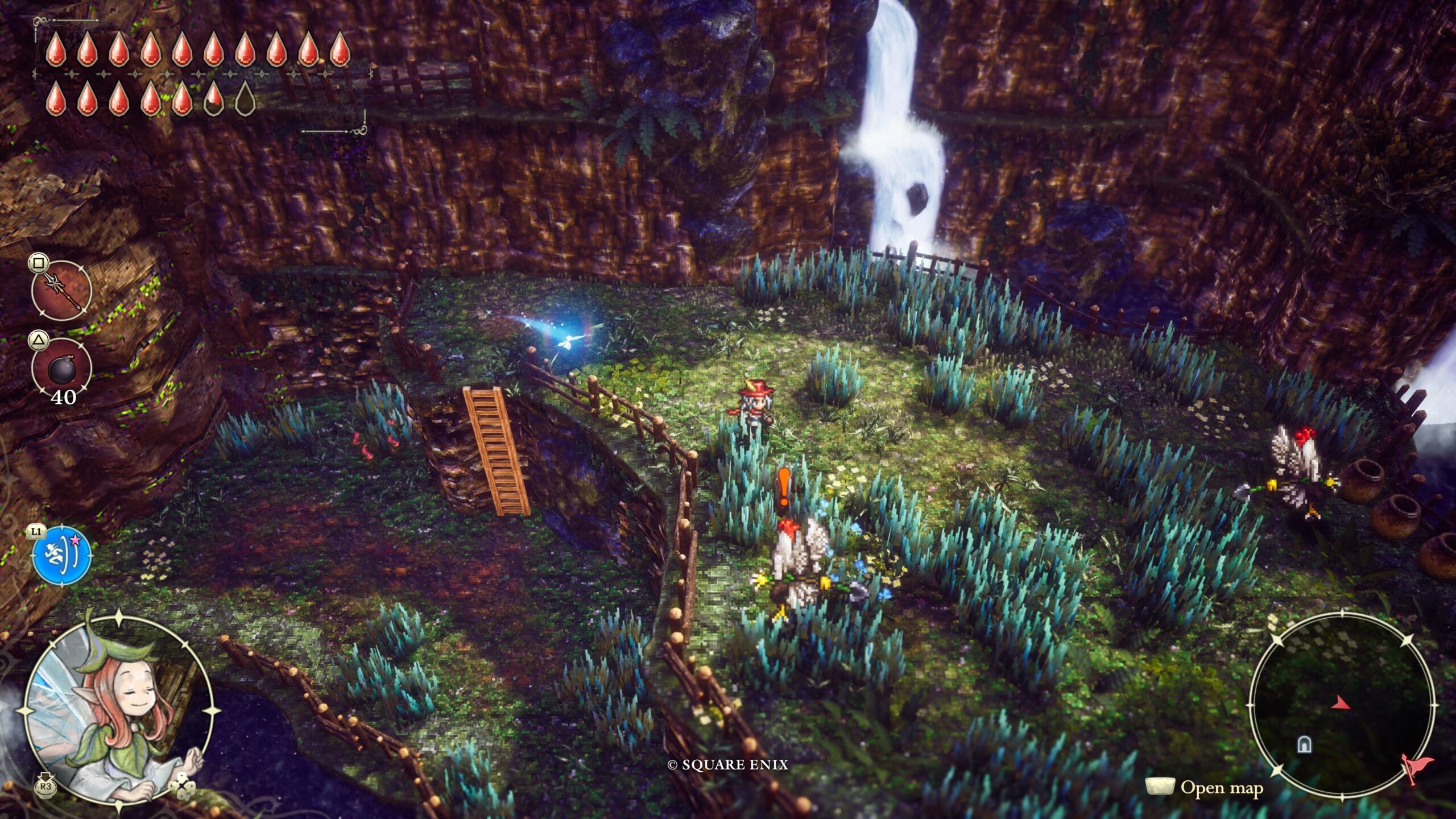
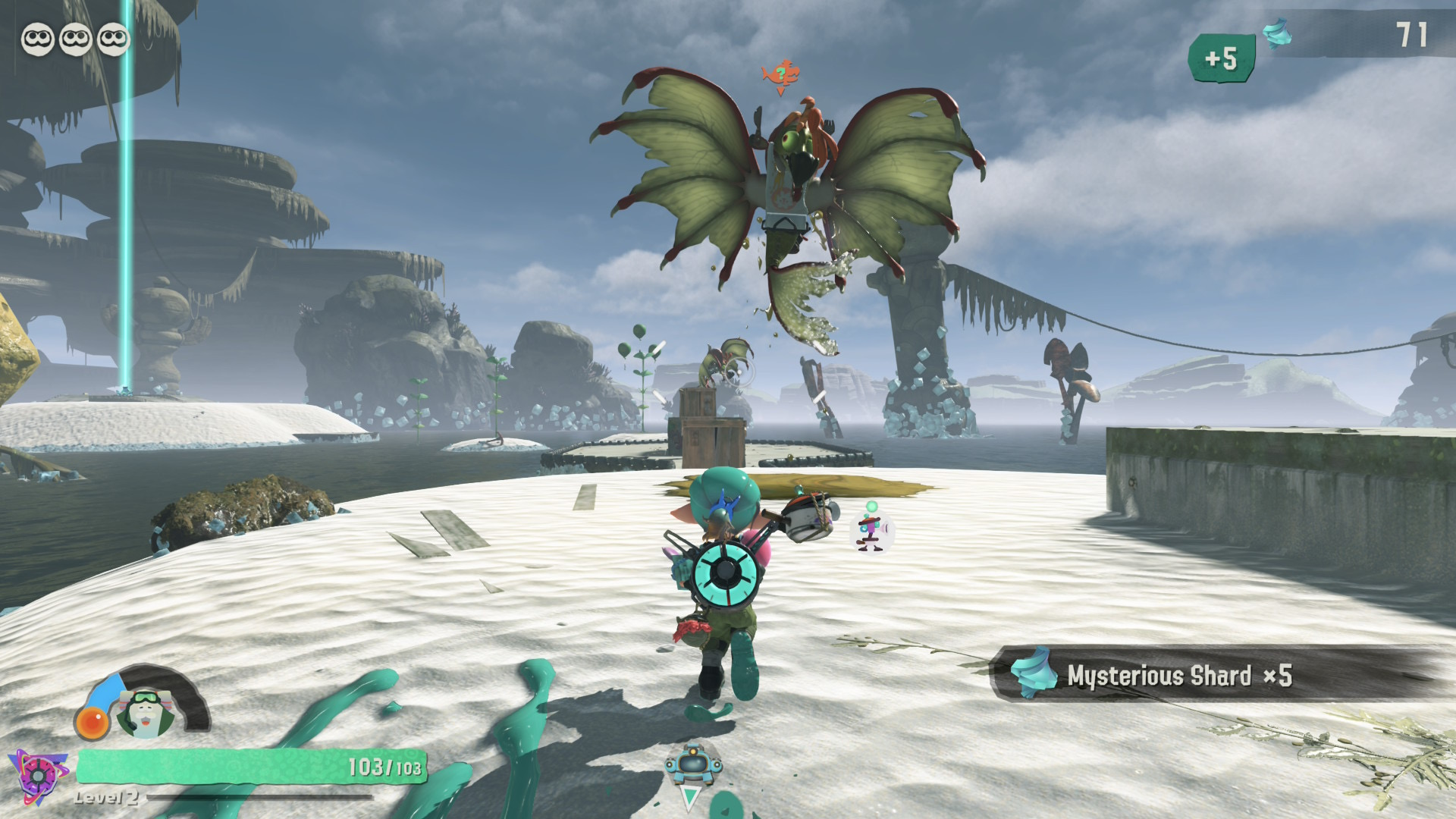
I know that the genres up there and the screenshot don’t make any sense together. Just go with it. This is Link to the Past if Zelda was a twin stick shooter. It jumps back and forth between overworld and dungeon segments like that. Where it gets the Metroidvania aspect is that the upgrades are generally more tuned toward things that aid in traversal that allow you to go back through areas you’ve visited prior for more content in a way that feels more involved than was typical of 2D Zelda.

As an example, early on it becomes pretty obvious that you’re limited by things like gaps and water, both of which are blockers for the player traversal. The first few dungeons give you upgrades straight in this progression. First you get a basic boost to move faster, which you can use to clear gaps with ramps. You then earn a jumpy/teleporty/dodgy maneuver to clear gaps on your own. You then get an upgrade to allow you to hover on water. These are all things that are earned by completing dungeons, but unlike Zelda these aren’t things that you use to complete a dungeon. Frankly, the bosses are all generally able to be defeated without them – although dodging through bullets or using speed boost to get to weak points quicker is certainly recommended. However, the upgrades have their biggest impact in the overworld. Even the biggest direct offense upgrade – a charge-based overpowered set of bullets – is used more to break down walls than really push combat. It’s that use of upgrades as overworld capabilities that makes this feel more directly Metroid than I was expecting.

But none of that would matter if the combat wasn’t fun and that does keeps me drawn in. The combat is constantly fun to engage with. Overworld combat is quick and aggressive with enemies coming from all over as you’re running through the world between dungeons and small little reward areas. Stuff will pop in and come in from off screen, making you stay on your toes. Dungeons have much more controlled room-based segments where waves with specific patterns come in. Some force you to move around in ways to avoid bullet waves, some to avoid enemies charging you, some to force you to kill things fast or be overwhelmed. Bosses then lean full in to the bullet hell where it often becomes less important to quickly kill the boss, and more important to avoid damage as first priority. I could disconnect the Zelda/Metroidvania metagame aspects and this game would still be good and still be engaging to run through as just a straight boss sequence (…which they let you do in the post game!).

However, it all felt fair. I usually enjoy bullet hell style games in pretty small bursts because they are usually exhausting. I finished this one in two seatings. I died a few times here and there, but checkpoints were common so I wasn’t necessarily losing a bunch of progress. Health during fights helps give some padding when I simply couldn’t avoid everything, and health drops were common enough (and could be upgraded to be more common!) to allow dungeon wave fights to feel pretty isolated from each other in a way that allowed them to individually be harder, knowing I would come out the other side with enough drops to be near full again. This is perhaps where the game felt the most Zelda to me in a way where difficulty came out of individual challenges, and not in stringing together a long sequence of simply avoiding damage.

I suppose pleasant surprise is the best way to describe this for me, but frankly it was the breath of fresh air I needed. Pokopia is a ton of fun, but it’s specific and detailed and slow in a way that I kind of jump in and out of it. World of Warcraft is fresh from a new expansion pack but is a game I’ve been playing for near 20 years and something I need to disengage from after a couple hours of play. This fit right in the gap for me. It was fast and exciting and interesting and fair and low friction while still being challenging. It was the break I needed.

Shelved It #22 – Spirit of the North 2

More Info from Infuse Studio

  • Genre: Action/Adventure
  • Platform: PS5
  • Also Available On: Steam, Xbox Series

I so badly wanted to like this game more than I did. The first game is a perfect example to me of a sit and chill game. It had some puzzles along the way, but it was largely just a relaxing walking simulator that looked fantastic. This one made some major leaps in its iterative choices – it’s open world, it’s got a lot more lore to discover, a much longer length, and it even has some combat. The problem for me was that by and large the iteration just did not hit.

The first obvious change is the move to an open world. For the most part this didn’t really change how I approached the game that much since linearly wandering and completing puzzles doesn’t feel that different to me than aimlessly wandering and completing puzzles. However, there’s a few things that snuck in to compensate this design that really dragged the experience down for me, both of which are tied to needing to find things in the environment.

One of these was the collecting of soul wisps. These are dotted around the environment or purchaseable via shops and are used for other things. In some cases, it’s things like ancient trees for skill points or for unlocking gates to get into other puzzles. The problem I had with them is that they are not marked at all on maps like the puzzle areas are, so finding them is either luck of walking past them or a need to wander in a very precise manner to cover the whole area. This is compounded by your ability to carry a fairly limited stock of them (I was up to 7 by the time I shelved) so you could easily cap them out and not really be in a position to remember where new ones are to pick up later when you need them. It ends up being an incredibly tedious system where to really be smart with it, it made sense to immediately just go wander around dumping them into things when you cap out instead of taking the game at your own pace.

There’s also a number of situations where you have to carry things to specific places, and that almost always feels like a drag. Sometimes it’s a need to find a torch to light a thing to let you into a puzzle area. This requires you to a) find a torch, b) light the torch, then c) walk to the spot to use it. Sometimes this is crucial story items at the end of puzzles that you then have to carry to some temple and place down. Until you do that (often a pretty significant walk) you also can’t really pick up other things without the risk of losing the key item, so you can’t even always complete other puzzles along the way. In these cases it just feels like the game is dragging you down to slow the pace in a negative way. This is compounded by the lack of fast travel potential. The handful of portals and the ability to fast travel to your last den are not really sufficient given the scale of the environment.

What this really results in is that the game feels open world for the sake of open world with a lot of the design decisions compounding negative feedback for the player experience walking around completing puzzles. Compared against what was essentially really enjoyable linear wandering in the first game, it feels like a big step backwards.

The new boss combat also feels like an unintentional misstep. Where boss fights feel like a good idea on the surface to get a bit more of an action tie-in to the story, these fights end up feeling slow and unforgiving.

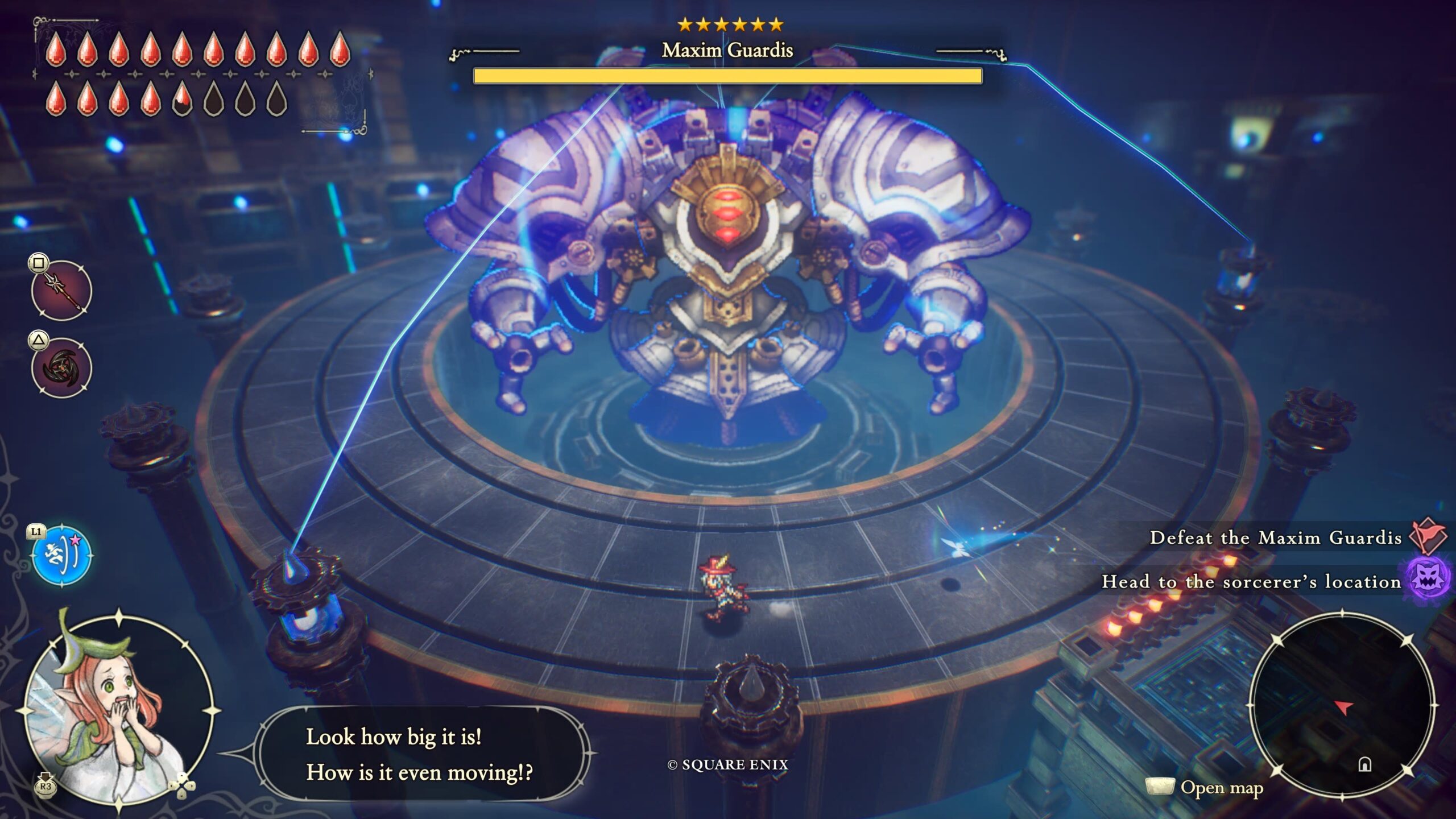
The screenshot above is an encounter where you have to avoid attacks while tethered to the center of the arena for 30-45 seconds before spirit walking to the pillars in the background to activate them. This fight had a few problems. One was practical – some attack tells were simply below the visuals of the arena making it impossible to see them. Another was balance – I could avoid getting hit for most of a phase, but then get hit once (see previous problem…) and I could easily be juggled from 100-0 health being bounced between attacks without an ability to get out of them. It never felt fun and finishing the fight was a relief instead of a triumph.

The last boss fight I did before shelving this was a set of two wolves. Each had their own attacks, but it was basically a very slow progression of them choosing a bite attack that I had to dodge, then a secondary attack that was a bit more randomized. Finally, they would move to a phase where they shot out rings of fire after which I could attack them. This was a case where I was able to again get through the fight completely unphased at full health, but a mistake in the last hit of the last phase of the fight meant that one of the wolves got its bite attack (which locked me in place) while the second wolf activated a fire beam (which I couldn’t avoid) and got knocked from 100-0 health without a chance to do anything.

As a developer this feels like a classic case of the team not compensating for their own skill at playing the game. Once you do a fight 5…10…100 times in development the fights become second nature to the point where it’s easy to forget what the experience will be like for a player getting to it for the first time. These are all cases of that for me. Stun locks are not fun. Being juggled without invulnerability after being hit is not fun. Randomized attacks that can flood the entire arena and sometimes just not allow dodging are not fun. However, these are things that are easy to miss when the fights are muscle memory, and that’s what it feels like happened here.

At its core this game didn’t really lose what made the first game enjoyable. The wandering and puzzle solving and beautiful visuals are all there. The problem I ultimately had was that that new things never felt like they stood up to the original game, so the experience kept feeling dragged down by them. The new things to support open world gameplay weren’t fun. The scale of wandering between things with nothing to do wasn’t fun. The boss combat, despite being well tied into the story, was not fun. It kind of just feels like a step to far for the series, where maybe a third title could have ultimately ended up here with a bit more of an iterative step in between.